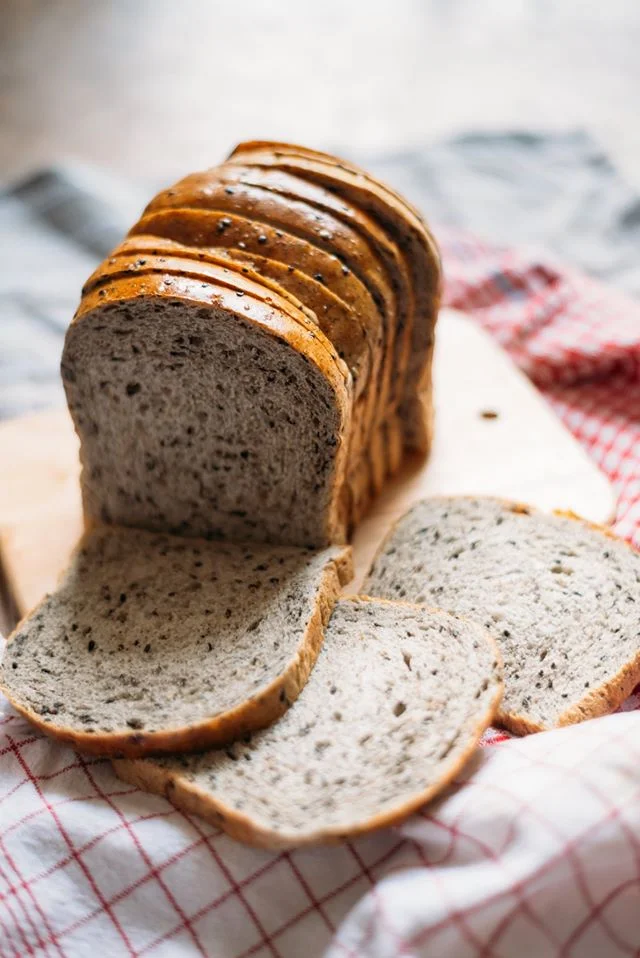


Whole grain bread has a rich taste, aroma and a characteristic denser texture. Unlike regular wheat flour, whole grain contains all parts of the grain, so the dough behaves a little differently during kneading and baking.
How to work with this flour correctly, how much water to add and how to make whole grain bread at home? Let’s analyze a simple recipe and the main nuances.
What is whole grain flour?
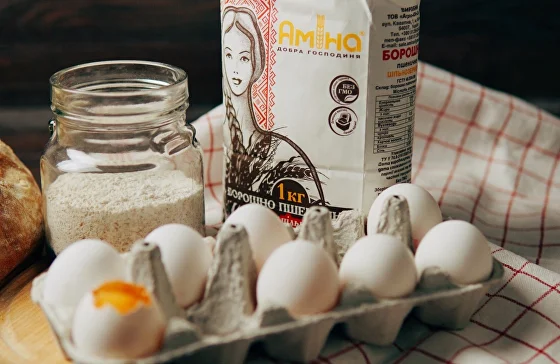
Whole grain flour is made from the whole wheat grain. It retains the endosperm, germ and grain shells. That is why this flour differs from high-grade flour not only in color, but also in the properties of the dough.
Due to the larger number of shell particles, whole grain flour can absorb more water. The dough turns out to be denser, and its structure is formed differently.
For more details on the features of working with whole grain flour, read our article “Whole grain flour: how to use and what to bake”.
Whole grain flour bread recipe
Ingredients
- 400 g whole grain wheat flour;
- 100 g premium wheat flour;
- 350–380 ml warm water;
- 7 g dry yeast;
- 10 g salt;
- 15–20 ml vegetable oil;
- 1 tsp. sugar or honey – optional.
How to make whole grain bread
1. Prepare the yeast
Dissolve the yeast and sugar or honey in warm water. Leave the mixture for a few minutes for the yeast to activate.
2. Knead the dough
Mix the whole grain and wheat flours, add salt. Gradually pour in the water and knead the dough.
Do not rush to add all the water at once. Whole grain flour can absorb different amounts of moisture depending on the characteristics of the grain and grinding.
3. Let the dough rest
After the initial kneading, let the dough rest for 15–20 minutes. During this time, the flour particles will absorb water and the dough will become more uniform.
4. Add the oil and knead the dough
After the rest, continue kneading. Whole wheat dough will not necessarily be as elastic as dough made from premium flour. This is normal.
5. Leave the dough to rise
Cover the bowl with a towel or cling film and leave in a warm place for about 60–90 minutes.
6. Shape the bread
When the dough has risen, carefully shape it into a loaf or transfer it to a baking dish.
7. Bake
Preheat the oven to 200–210 °C. Bake the bread for approximately 35–45 minutes, depending on the size of the loaf and the characteristics of your oven.
The finished bread should have a golden crust and a well-baked center.
Why can whole grain bread be dense?
This is one of the most common characteristics of whole grain bread. Grain shells can affect the formation of the gluten framework, so the finished product often has a denser structure.
The amount of water, kneading time, dough temperature and proofing time also affect the result.
How to make whole grain bread fluffier?
- do not add too much flour during kneading;
- give the dough enough time to rest and proof;
- control the amount of water;
- do not shorten the fermentation time unnecessarily;
- if desired, replace part of the whole grain flour with high-grade wheat flour.
Can I use only whole grain flour?
Yes, but the result will be different from bread made from a mixture of flours. The product may be denser and have a pronounced grainy taste.
For a softer and lighter structure, a mixture of whole grain and wheat flour is often used.
How to store finished bread?
After baking, let the bread cool completely on a wire rack. Do not immediately pack the hot product, as condensation may accumulate inside.
Store the bread in a paper bag or a special bread bin. For long-term storage, it can be sliced and frozen.
FAQ: popular questions
Can bread be baked only with whole grain flour?
Yes. However, such breads usually have a denser structure and a more pronounced grain flavor.
Why does whole wheat dough absorb a lot of water?
Whole wheat flour contains particles of the grain shell, which affect moisture absorption. Therefore, the amount of water may vary depending on the specific flour.
Why did whole wheat bread not rise?
The reason may be insufficient water, weak yeast activity, short proofing time, or excessive flour.
Conclusion
Whole grain bread requires a slightly different approach than regular wheat bread. The key is to control the amount of water, not overload the dough with flour, and give it enough time to develop its structure.
The quality of the flour also directly affects the consistency of the result. Check out AMINA whole grain flour and learn more about our products.
Enjoy your meal!