


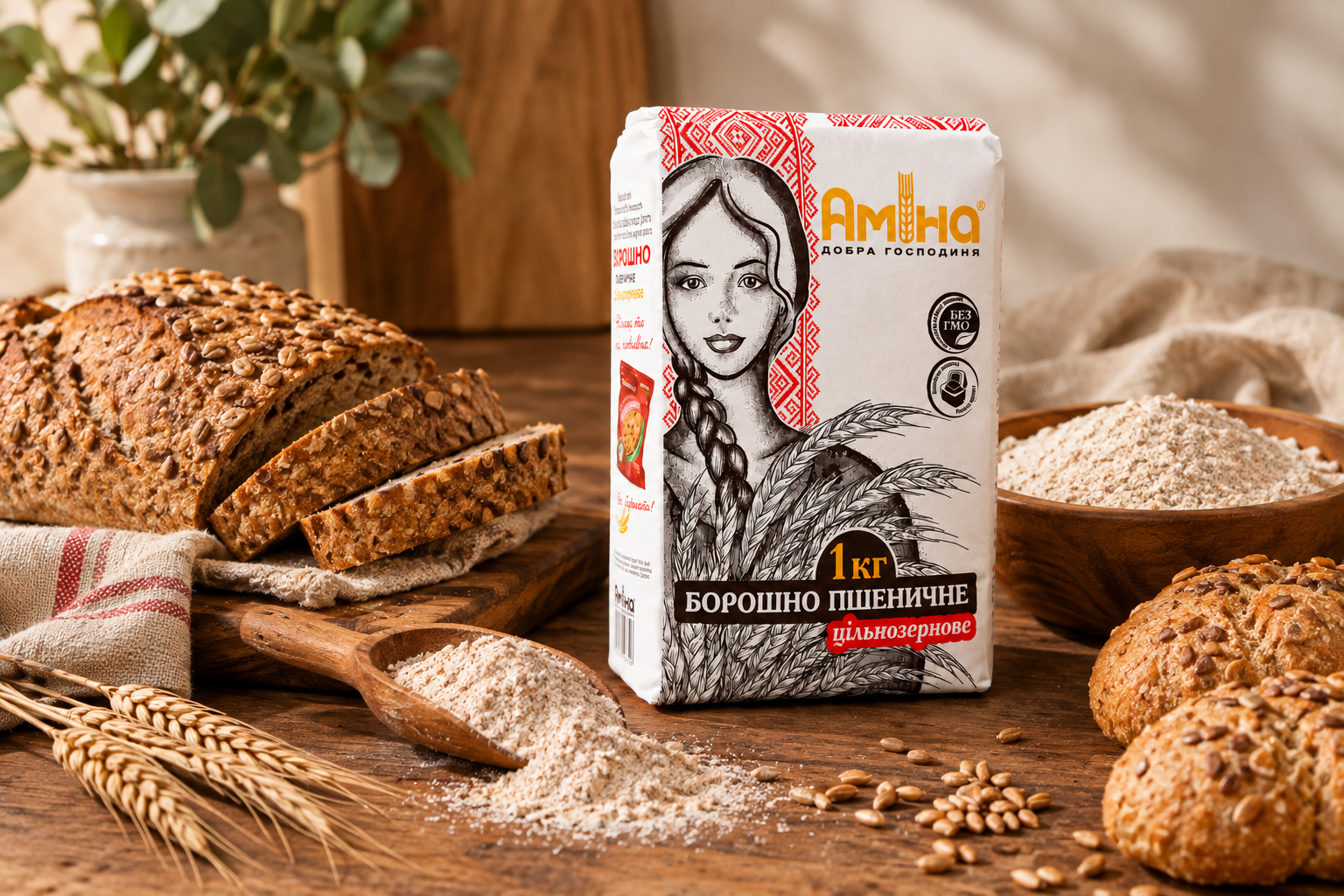
Whole wheat flour is increasingly used not only for bread but also for rolls, pancakes, cookies, pies and other baked goods. However, dough made with whole wheat flour can behave differently from dough made with refined wheat flour.
Why does whole wheat flour have different properties? Can it completely replace refined flour? Does it require more liquid? Here is what you need to know before baking with it.
What Is Whole Wheat Flour?
Whole wheat flour is produced from wheat grain while retaining its main components — the bran, germ and endosperm.
This is what distinguishes it from flour produced from more refined parts of the grain. Whole wheat flour usually has a darker color, a more pronounced grain flavor and aroma, and a more noticeable texture.
These characteristics should be taken into account when preparing dough and choosing a recipe.
How Is Whole Wheat Flour Different from Refined Wheat Flour?
| Characteristic | Whole Wheat Flour | Refined Wheat Flour |
|---|---|---|
| Grain components | Main parts of the grain are retained | Primarily the endosperm is used |
| Color | Usually darker | Lighter |
| Flavor and aroma | More pronounced grain flavor | Milder and more neutral |
| Dough texture | Can be denser and more pronounced | Usually more uniform and elastic |
| Applications | Bread, rolls, pancakes, cookies and pies | Bread, pastries, confectionery and other baked goods |
How Does Whole Wheat Flour Behave in Dough?
Whole wheat flour can absorb more water than flour made from more refined parts of the grain. This is influenced by the bran particles and other components of the whole grain.
As a result, dough may feel denser or drier when the same amount of liquid is used as in a recipe based on refined wheat flour.
When replacing flour, it is therefore important to consider not only the weight of the ingredients but also the consistency of the dough.
Does Whole Wheat Flour Need More Water?
In many recipes, whole wheat flour may require more liquid, but there is no universal amount that works for every type and brand.
Water absorption depends on the characteristics of the flour, the degree of milling, the recipe and other ingredients.
If the recipe allows adjustments, add liquid gradually and check the dough consistency as you go.
Can You Completely Replace Refined Flour with Whole Wheat Flour?
Yes, whole wheat flour can be used as the main flour in many recipes. However, a complete substitution does not always produce the same result as refined wheat flour.
The finished product may differ in volume, texture, color and crumb density.
If you are new to baking with whole wheat flour, starting with a partial substitution can make it easier to adjust the recipe and find the right balance for the desired result.
What Can You Bake with Whole Wheat Flour?
Whole wheat flour can be used for a variety of baked goods:
- bread;
- rolls and buns;
- pancakes;
- cookies;
- pies;
- cakes;
- muffins;
- homemade pizza and other baked goods.
How to Bake Successfully with Whole Wheat Flour
- Consider the properties of the flour. The same amount of different flours can behave differently in the same recipe.
- Control the amount of liquid. If the recipe allows, add it gradually.
- Check the dough consistency. It should match the type of baked product you are making.
- Give the dough enough time. In some recipes, resting the dough after mixing allows the flour to absorb liquid more effectively.
- Monitor baking temperature and time. Do not rely only on the color of the crust when determining doneness.
Why Can Whole Wheat Bread Turn Out Dense?
A dense texture does not necessarily mean that the flour is of poor quality or that the recipe is wrong. The result can be affected by the amount of water, mixing, yeast activity, proofing time and the properties of the flour itself.
If the dough is not sufficiently hydrated or does not have enough time to develop its structure, the finished bread may be denser than expected.
AMINA Whole Wheat Flour
AMINA whole wheat flour can be used for bread, rolls, pancakes, cookies and other baked goods.
For a predictable result, it is important to consider the properties of the specific product and adjust the recipe to the type of baked product you want to make.
Learn more about AMINA whole wheat flour →
Whole Wheat Flour: Key Takeaways
Whole wheat flour differs from refined wheat flour in more than just color. Retaining the main components of the grain affects its properties, water absorption, dough structure and the characteristics of the finished baked product.
Successful baking with whole wheat flour is therefore not simply a matter of replacing one flour with another. It is important to consider dough consistency, liquid levels and the preparation method.
FAQ
How is whole wheat flour different from regular flour?
Whole wheat flour is produced from the grain while retaining its main components. As a result, it has different properties, color, flavor and baking characteristics.
Can I completely replace refined flour with whole wheat flour?
In many recipes, yes. However, the finished product may differ in volume, texture and density.
Does whole wheat flour require more water?
It may require more liquid, but the exact amount depends on the characteristics of the flour and the recipe.
Why does whole wheat bread turn out dense?
The density can be affected by hydration, mixing, proofing time, yeast activity and the properties of the flour.
What is whole wheat flour used for?
It can be used for bread, rolls, pancakes, cookies, pies, cakes, muffins and other baked goods.
How is whole wheat flour different from rye flour?
They are different types of flour. Whole wheat flour is made from whole wheat grain, while rye flour is made from rye. They have different properties and behave differently in dough.
